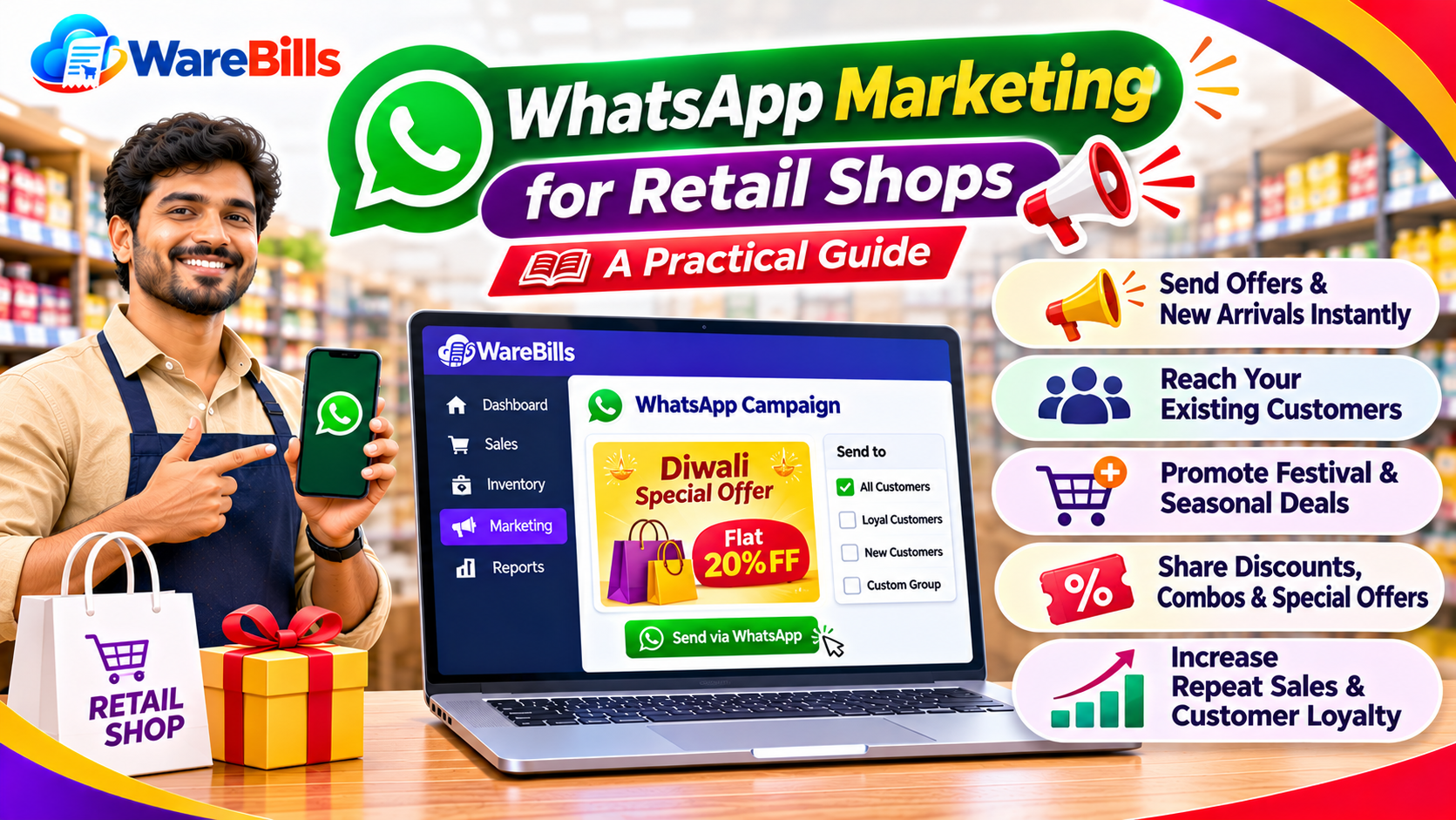
WhatsApp is a familiar communication channel for many customers in India. Retailers can use it to share product updates, announce offers, inform customers about new arrivals and maintain communication after a purchase.
However, successful WhatsApp marketing is not about sending messages to everyone every day. It is about sharing relevant information with customers who have agreed to receive it.
In this guide, we will explore practical ways retail shops can use WhatsApp campaigns to encourage repeat purchases, improve customer engagement and organise their marketing activities.
1. Build a Customer Contact List With Permission
Before starting a WhatsApp marketing campaign, create an organised list of customers who have explicitly agreed to receive promotional messages.
You can invite customers to subscribe when they visit your shop, complete a purchase or interact with your business through an appropriate online channel.
Keep customer information organised, including:
- Customer name and contact number
- Product categories they are interested in, where voluntarily provided
- Date of their last purchase, if available
- Communication preferences and consent status
Do not add customers to promotional lists without their permission. Follow applicable privacy requirements and WhatsApp's business messaging policies.
An organised, permission-based contact list helps you send more relevant messages while respecting customer preferences.
2. Share New Arrivals and Product Updates
Customers may not know when your shop receives new products. WhatsApp can help you notify interested customers about new stock without requiring them to visit the shop first.
For example:
- A clothing store can announce a new collection.
- A mobile accessories shop can share information about newly arrived accessories.
- A grocery store can highlight selected seasonal products.
- A cosmetics retailer can introduce newly available products.
Use clear product photos, brief descriptions and accurate prices where appropriate. Include essential details such as availability and offer validity.
Avoid sending the same update to every customer if the products are relevant only to a specific group.
3. Create Targeted WhatsApp Campaigns
A campaign becomes more useful when its message matches the customer's interests.
Instead of sending one general promotion to your entire contact list, divide opted-in customers into relevant groups.
Customer grouping should use information collected appropriately and should respect each customer's communication preferences.
Targeted campaigns can reduce irrelevant messages and make your promotions more useful to recipients.
4. Use Offers to Encourage Repeat Purchases
A well-planned offer can give customers a reason to visit your shop again. The offer should be financially practical for your business and easy for customers to understand.
Some examples include:
- A discount on selected products
- A limited-period seasonal promotion
- A bundle offer on related products
- A special offer for opted-in regular customers
- A promotion on newly arrived stock
For example, a retailer might send an opted-in customer group a message announcing a three-day offer on selected products.
Clearly mention the eligible products, conditions, validity period and any minimum purchase requirements. Avoid misleading discounts or offers that are difficult to redeem.
Before launching a campaign, estimate the discount cost and expected sales impact. More sales do not necessarily mean more profit if the discount is too large.
5. Send Useful Post-Purchase Messages
Customer communication should not stop immediately after a sale. Relevant follow-up messages can help customers get more value from their purchases and remember your business.
Depending on the product and the customer's preferences, you might send:
- Product care instructions
- Warranty or service information
- A request for feedback
- Information about compatible accessories
- A reminder about a regularly purchased product, when appropriate
For example, an electronics retailer may share product care instructions after a customer purchases an appliance.
Only send promotional follow-ups when the customer has given the required permission. Keep service messages relevant to the original purchase and provide a clear way for customers to stop receiving marketing messages.
6. Plan Messages Around Festivals and Seasonal Demand
Festivals and seasonal changes can create opportunities for retail businesses to reconnect with customers.
Retailers in Tamil Nadu may plan campaigns around occasions such as Pongal, Tamil New Year, Deepavali and other relevant local celebrations.
Examples include:
- Festival clothing collections
- Gift items and seasonal product bundles
- Household product promotions
- Special opening-hour announcements
- Advance information about seasonal stock
Plan campaigns ahead of time so you can confirm product availability, pricing and stock levels before promoting an offer.
Avoid advertising products that are unavailable or quantities that your business cannot reasonably supply.
7. Choose the Right Time and Message Frequency
Even useful messages can become annoying when sent too frequently.
Develop a simple campaign calendar instead of sending messages whenever there is an opportunity to promote something.
For example, your schedule might include a new-arrival announcement, a relevant seasonal promotion and an occasional customer update. The actual frequency should depend on customer expectations, product type and engagement.
Follow these practices:
- Keep messages short and clear.
- Send messages at reasonable local times.
- Avoid repeated promotional messages in a short period.
- Respect requests to stop receiving messages.
- Monitor negative feedback and adjust your campaign frequency.
The goal is to stay useful and memorable, not to fill the customer's inbox.
8. Measure Campaign Results
Sending messages is only one part of WhatsApp marketing. Retailers should also evaluate whether campaigns contribute to meaningful customer engagement and sales.
Track relevant measurements such as:
- Number of customers who opted in
- Messages delivered, where reporting is available
- Customer replies and enquiries
- Offer redemptions
- Sales associated with a campaign
- Repeat purchases during a defined period
- Unsubscribe requests and negative feedback
Use unique offer codes or ask customers how they heard about a promotion to help identify campaign-related purchases.
Compare similar periods where possible. For example, evaluate a festival campaign against a comparable previous period, while considering seasonal demand and other factors that might affect sales.
Do not assume every purchase made after a message was sent resulted from that message.
9. Connect Marketing Activities With Daily Retail Operations
Marketing works best when it reflects what is actually happening in the shop.
Before announcing an offer, staff should verify that the products are available and that the advertised price is correct. After the campaign, review sales and stock movement to understand which products attracted customer interest.
Billing and inventory software can support these activities by helping businesses maintain sales records and monitor stock information, depending on the software's available features.
WareBills is a billing and inventory software option for businesses evaluating ways to organise their daily retail operations. Retailers can assess whether its available features suit their billing, inventory tracking and reporting requirements while planning their customer marketing activities.
Do not assume that billing or inventory software automatically provides WhatsApp campaign functionality. Confirm any required integration or marketing feature before selecting a solution.
10. Common WhatsApp Marketing Mistakes to Avoid
Retail businesses can make their campaigns more effective by avoiding a few common mistakes.
Sending unsolicited messages: Contacting people who have not agreed to receive promotional messages can damage trust and may violate platform policies.
Promoting unavailable products: Customers may lose confidence if an advertised product is out of stock.
Sending the same offer repeatedly: Repetitive messages can lead to muted conversations, blocks or unsubscribes.
Ignoring customer replies: Respond promptly to genuine enquiries and provide accurate information.
Failing to measure results: Without tracking, it becomes difficult to understand whether a campaign contributes to business goals.
Ignoring customer privacy: Collect and use contact details responsibly, limit access to customer information and follow applicable requirements.
A disciplined approach helps retailers build customer relationships without overwhelming their audience.
Conclusion
WhatsApp marketing can be a practical communication channel for retail shops that want to share product updates, announce relevant offers and encourage customers to return.
Start by building a permission-based contact list, segmenting customers appropriately and sending useful messages at a reasonable frequency. Coordinate campaigns with actual stock availability, measure results and adjust your approach based on customer responses.
Combined with organised billing and inventory processes, a well-planned customer communication strategy can help retail businesses build stronger relationships and make more informed marketing decisions.
For businesses evaluating WareBills, reviewing its available billing, inventory and reporting features can help determine whether it fits their day-to-day retail requirements.