Two important documents in this process are the purchase order and the purchase invoice. Although both relate to the same transaction, they serve different purposes.
Understanding the difference helps businesses avoid duplicate entries, incorrect stock updates, payment disputes and mismatches between ordered goods and supplier bills.
What Is a Purchase Order?
A purchase order (PO) is a commercial document issued by a buyer to a supplier to request goods or services under specified terms.
It records what the business intends to purchase before the supplier fulfils the order. Once accepted, it can also serve as evidence of the agreed order terms, subject to the applicable agreement.
A purchase order commonly includes:
- Purchase order number and date
- Buyer and supplier details
- Product names, codes and descriptions
- Ordered quantities
- Agreed prices
- Applicable taxes and discounts, where relevant
- Expected delivery date
- Delivery location and payment terms
Example of a Purchase Order
A wholesale shop needs 100 units of a product from a supplier at ₹200 per unit. The shop creates a purchase order specifying the product, quantity, agreed price and expected delivery date.
The order value before applicable taxes and other charges is ₹20,000.
At this stage, the document records the order. It does not, by itself, prove that the goods have been delivered or that the supplier has issued a bill.
What Is a Purchase Invoice?
A purchase invoice is a document received from a supplier requesting payment for goods or services supplied, according to the transaction and agreed terms.
For GST-registered transactions in India, the supplier's tax invoice must meet the applicable GST requirements where a tax invoice is required.
A purchase invoice commonly records:
- Supplier invoice number and date
- Supplier and buyer details
- Products or services supplied
- Actual quantities billed
- Unit prices and applicable discounts
- Taxable value and applicable taxes
- Additional charges, where applicable
- Total amount payable
- Payment terms
Example of a Purchase Invoice
The supplier delivers 100 units at ₹200 per unit and issues an invoice for the supplied goods.
The product value before applicable taxes and additional charges is ₹20,000.
The buyer checks the invoice against the purchase order and delivery records before recording the purchase and arranging payment according to the agreed terms.
If only 95 units were delivered, the buyer should investigate the quantity difference instead of assuming that the order and invoice match.
Purchase Order vs Purchase Invoice: Key Differences
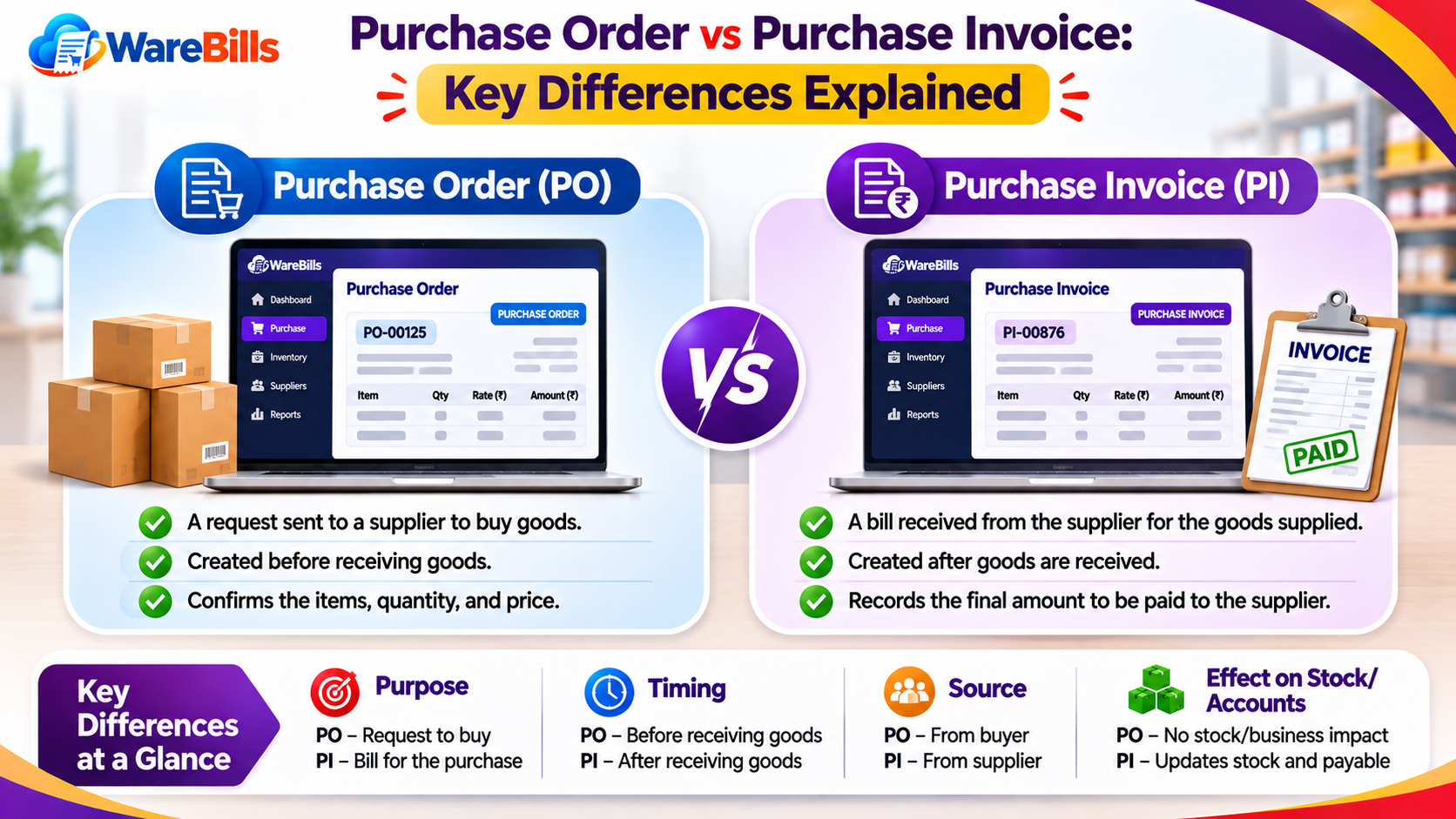
The key difference is simple: a purchase order records what the buyer orders, while a purchase invoice records what the supplier bills.
How the Purchase Order and Invoice Work Together
A reliable purchasing process connects the order, delivery and invoice instead of treating each document as an isolated record.
Step 1: Identify the stock requirement
Check current stock, expected demand and existing orders before deciding how much to purchase. This reduces unnecessary bulk buying and duplicate orders.
Step 2: Create the purchase order
Record the supplier, products, quantities, agreed prices and expected delivery terms. Obtain the necessary internal approval if the business follows a purchase approval process.
Step 3: Receive and inspect the goods
When the goods arrive, compare the delivered quantities and product details with the order. Record shortages, damaged items or incorrect products.
Step 4: Verify the purchase invoice
Compare the supplier's invoice with the purchase order and delivery records. Review quantities, unit prices, discounts, tax details and additional charges.
Step 5: Record the purchase and manage payment
After resolving discrepancies, record the purchase using the business's accounting and inventory procedures. Track the amount payable, payment due date and subsequent payments.
This process helps the business maintain more reliable stock and financial records.
What Is Three-Way Matching?
Three-way matching is a control process that compares three records:
- Purchase order: What the buyer ordered.
- Goods receipt record: What the business actually received.
- Supplier invoice: What the supplier billed.
For example, a purchase order lists 100 units at ₹200 each. The goods receipt record shows that 100 units arrived, and the invoice also bills 100 units at ₹200 each. The quantity and unit-price checks match, although taxes, discounts and other charges must still be verified.
If the invoice bills 105 units but the business received only 100, the discrepancy should be investigated before the invoice is approved for payment.
Not every small business needs a formal three-way matching system, but the principle is valuable when purchasing frequently or handling high-value orders.
Common Purchase Order and Invoice Mistakes
Businesses should watch for these common errors:
- Duplicate purchase orders: Reordering products without checking existing open orders.
- Incorrect quantities: Recording billed quantities without confirming actual deliveries.
- Price mismatches: Accepting invoice prices that differ from agreed prices without review.
- Tax calculation errors: Failing to check applicable tax rates, taxable values or invoice details.
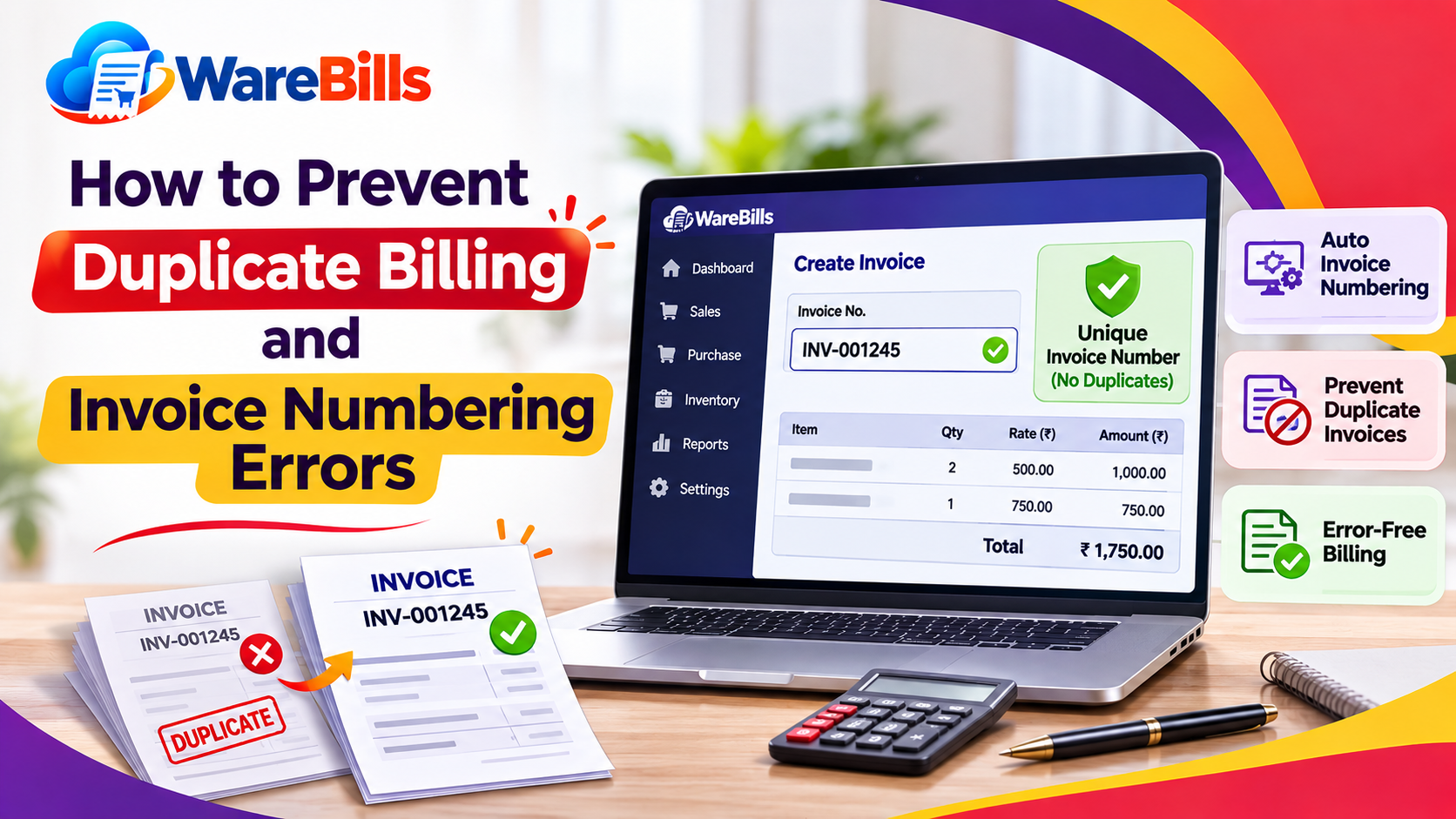
- Duplicate invoices: Recording the same supplier invoice more than once.
- Unrecorded purchase returns: Leaving returned goods and supplier credit notes out of the records.
- Premature stock updates: Increasing inventory when an order is created rather than when goods are received, unless the system specifically tracks ordered and available stock separately.
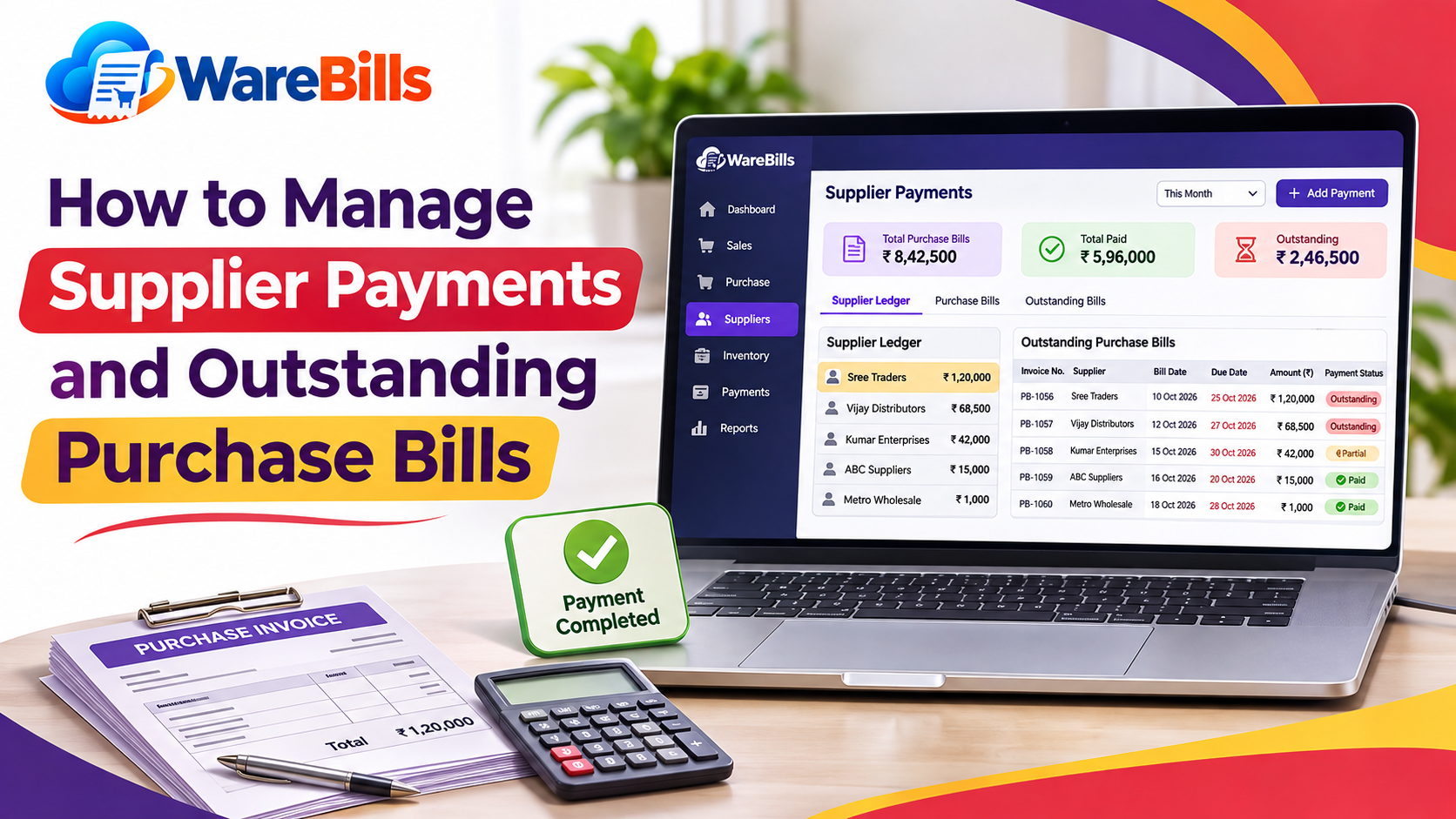
- Untracked outstanding payments: Losing sight of supplier balances and due dates.
Consistent document references and timely record updates make these issues easier to detect.
How Billing and Inventory Software Can Help
Businesses handling multiple suppliers and frequent purchases may benefit from software that helps organise purchasing and stock records.
When evaluating a solution such as WareBills, check whether its available features support your requirements for:
- Purchase order creation and tracking
- Purchase invoice entry
- Supplier records and outstanding balances
- Purchase returns and related adjustments
- Stock updates and inventory reports
- Purchase history and document references
Confirm the actual capabilities of the chosen software before relying on it for a specific workflow. Keep supplier documents and delivery evidence accessible so discrepancies can be resolved efficiently.
For businesses that still use spreadsheets or paper records, start by maintaining a unique document number, supplier name, order date, delivery status, invoice number and payment status for every purchase.
Conclusion
A purchase order and a purchase invoice are related but serve different purposes. The purchase order records the buyer's request, while the purchase invoice records the supplier's bill for the transaction.
By comparing orders, delivery records and invoices, businesses can reduce purchasing errors, improve stock accuracy and manage supplier payments more effectively.
Whether you run a retail shop, wholesale business or distribution company, a consistent purchasing process helps keep inventory and financial records organised as the business grows.