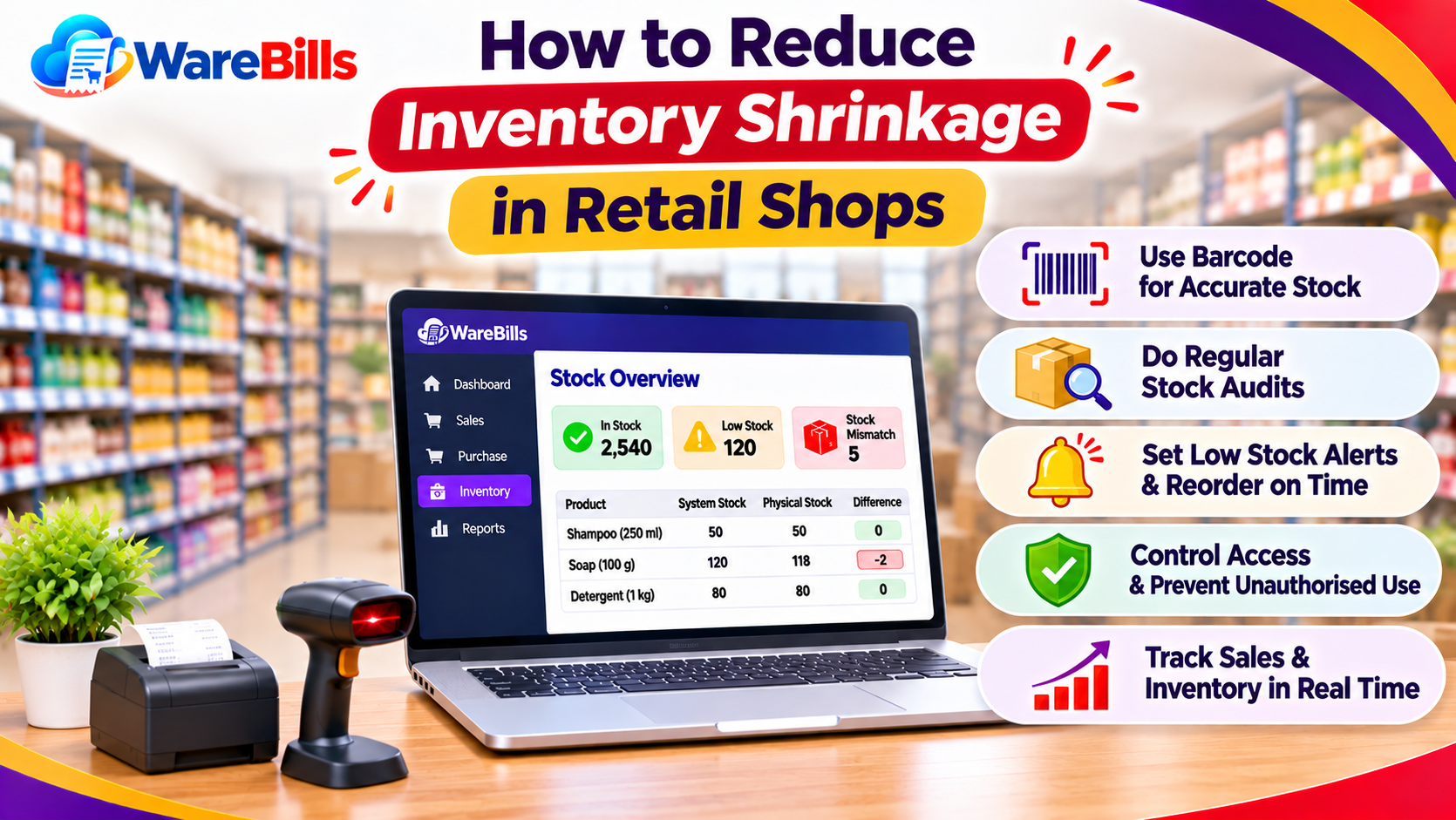
Inventory shrinkage occurs when the actual quantity of stock is lower than the quantity shown in business records. It can happen because of theft, damaged products, administrative mistakes, supplier discrepancies, unrecorded sales or incorrect stock adjustments.
For small retail shops in Tamil Nadu, even repeated small stock differences can affect profitability over time. A grocery shop, textile retailer, electronics store or wholesale business needs reliable processes to identify and prevent these losses.
In this guide, we will explain common causes of inventory shrinkage and practical ways to improve stock control.
1. Understand the Common Causes of Inventory Shrinkage
Before reducing stock losses, identify where the differences may be occurring.
Common causes include:
- Shoplifting: Products are taken without payment.
- Internal theft: Employees remove products without proper authorisation or recording.
- Receiving errors: The quantity received from a supplier does not match the quantity recorded.
- Billing mistakes: Products leave the shop without the correct transaction being recorded.
- Damaged goods: Broken or unusable items remain in the system as available stock.
- Incorrect stock adjustments: Quantities are changed without a valid reason or supporting record.
- Returns processing errors: Returned products are added back to inventory incorrectly.
- Counting mistakes: Physical stock counts contain errors.
Not every stock discrepancy indicates theft. Investigate the transaction history and stock-handling process before drawing conclusions.
2. Calculate Your Inventory Shrinkage Rate
Measuring shrinkage helps businesses understand the scale of the problem and compare results over time.
A basic calculation is:
Inventory shrinkage = Recorded inventory value − Actual inventory value
The shrinkage rate can be calculated as:
Shrinkage rate (%) = (Inventory shrinkage value ÷ Recorded inventory value) × 100
For example, suppose a shop's inventory records show stock worth ₹5,00,000, but a physical count reveals that the actual stock is worth ₹4,90,000.
- Recorded inventory value: ₹5,00,000
- Actual inventory value: ₹4,90,000
- Inventory shrinkage: ₹10,000
- Shrinkage rate: 2%
This is an illustrative calculation. Ensure both inventory values are measured using the same valuation method and refer to the same stock scope and date.
The calculation shows the difference, but it does not explain the cause. The next step is to investigate the discrepancy and identify corrective action.
3. Conduct Regular Physical Stock Counts
Physical stock counting is one of the most practical ways to detect inventory differences.
Compare the actual quantity on your shelves and in your storage area with the quantity shown in your records.
You can use different counting approaches depending on the size of your business.
Full stock count
Count all inventory during a planned period. This may be suitable for small shops with a manageable number of products.
Cycle counting
Count selected products on a rotating schedule rather than counting everything at once.
For example, you could check high-value products weekly, fast-moving items more frequently and lower-risk products on a less frequent schedule.
Spot checks
Perform occasional checks on products that have unusual stock differences, high sales volumes or greater loss risk.
Record the physical count, system quantity, difference and investigation result. Repeated differences involving the same product or location may reveal a process problem that needs attention.
4. Improve Supplier Receiving Procedures
Stock discrepancies can begin before products reach the sales floor.
When receiving a supplier delivery, compare the delivered goods with the relevant purchase order, delivery document or supplier invoice, as appropriate.
Check:
- Product names and identifiers
- Quantities delivered
- Sizes, colours or variants
- Visible damage
- Batch or expiry details where relevant
- Missing or substituted items
- Supplier pricing and document differences
Do not automatically assume that the quantity listed on an invoice is the quantity physically received.
Record shortages, damaged products and other discrepancies promptly. Follow the agreed supplier process for resolving them.
A consistent receiving procedure helps prevent incorrect stock quantities from entering your records.
5. Strengthen Billing and Sales Controls
Products sold without accurate transaction records can create differences between physical stock and recorded inventory.
Make sure staff follow consistent billing procedures.
Practical controls include:
- Record sales through the approved billing process.
- Verify product quantities before completing transactions.
- Review cancelled invoices and voided transactions.
- Check whether discounts and returns are recorded correctly.
- Restrict access to sensitive transaction adjustments.
- Review unusual patterns of cancellations, refunds or manual changes.
For example, if a product leaves the shop but the invoice is cancelled incorrectly, the stock record may not reflect what happened.
Investigate unusual transactions through appropriate records rather than relying on assumptions. Clear responsibilities and review procedures help identify mistakes early.
6. Secure Storage and High-Risk Products
The way products are stored can influence the risk of loss.
High-value, compact or easily misplaced products may require additional controls. Examples can include electronics accessories, cosmetics, premium clothing accessories and selected packaged goods.
Consider the following practices:
- Keep high-value products in appropriately secured storage.
- Limit access to stockrooms where practical.
- Organise products so quantities are easier to verify.
- Maintain clear records when stock is moved.
- Use cameras or other security measures where appropriate and lawful.
- Establish procedures for reporting missing or damaged goods.
Security measures should be proportionate to the business's needs and should respect employee and customer privacy.
7. Record Damaged, Expired and Unsellable Products
Damaged or expired products can create stock differences if they are not recorded correctly.
For example, a grocery shop may discover expired goods during a shelf check. If the products remain in the system as available stock, the recorded quantity will no longer reflect usable inventory.
Create a consistent process for handling:
- Damaged products
- Expired goods
- Products returned by customers
- Goods rejected during receiving
- Products removed for internal use
- Items written off as unsellable
Record the quantity, reason, date and required authorisation. Where appropriate, keep supporting documentation.
For products with expiry dates, use suitable stock rotation procedures, such as issuing older eligible stock first, while following product safety and storage requirements.
8. Control Stock Adjustments and Returns
Stock adjustments are sometimes necessary, but unexplained changes can hide underlying problems.
Require staff to record a reason when inventory quantities are changed. Depending on the business, reasons may include a verified counting correction, damaged stock, an approved write-off or a documented transfer.
For returns, define what should happen when a customer brings a product back.
Check whether the item is suitable for resale, needs inspection or must be kept separate from saleable inventory. Not every returned product should automatically be added back to available stock.
Review repeated adjustments and unusual return patterns. These reviews can help identify training gaps, transaction errors or weaknesses in existing controls.
9. Use Inventory Software to Improve Stock Visibility
Manual records can become difficult to maintain when a shop handles many products and transactions.
Suitable inventory software may help businesses record purchases, sales, returns, stock adjustments and transfers. The available features vary by system, so confirm that the product supports the controls your business needs.
When evaluating software, check whether it provides:
- Current stock quantities
- Transaction history by product
- Stock adjustment records
- User permissions
- Stock movement reports
- Low-stock alerts
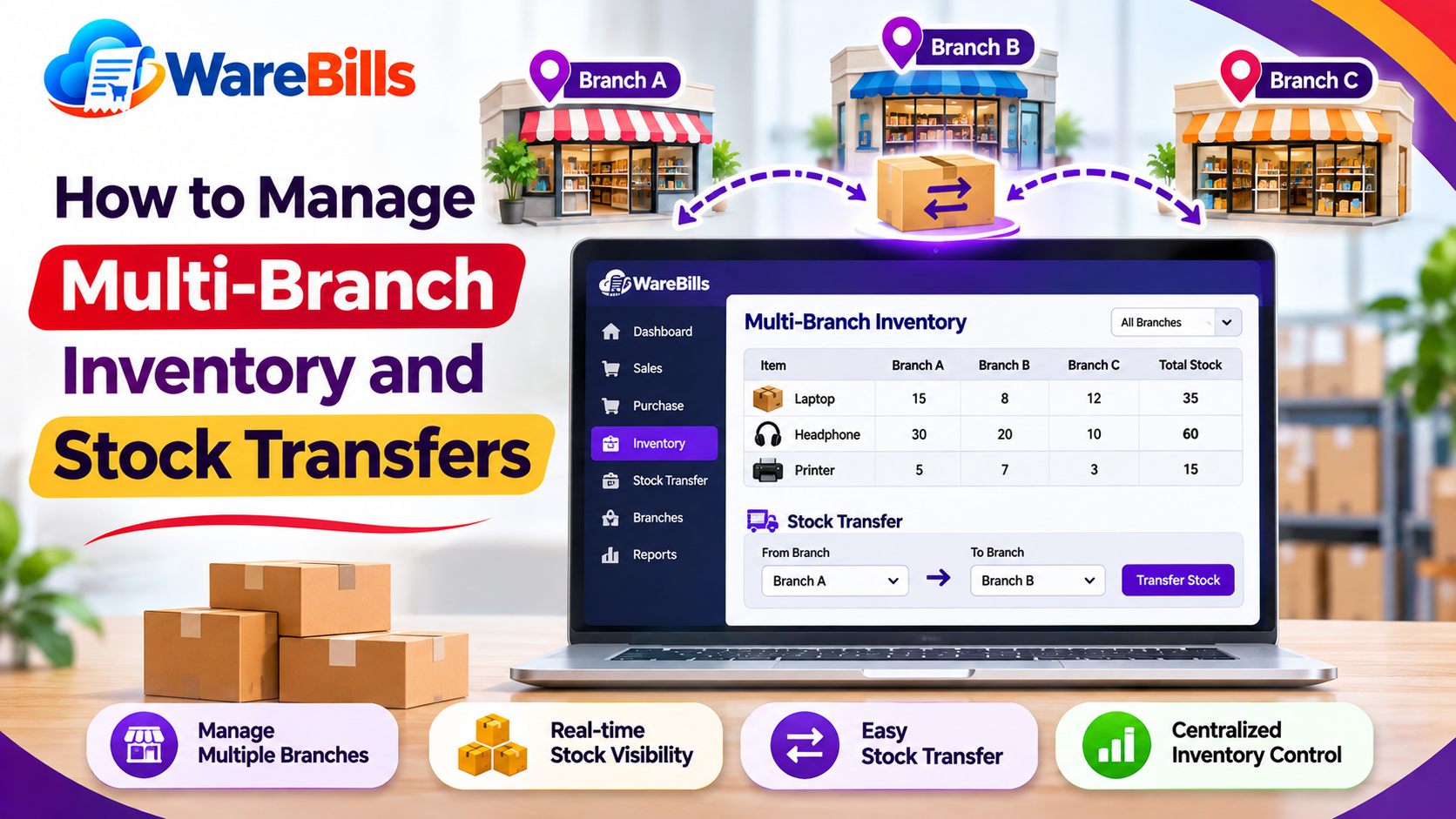
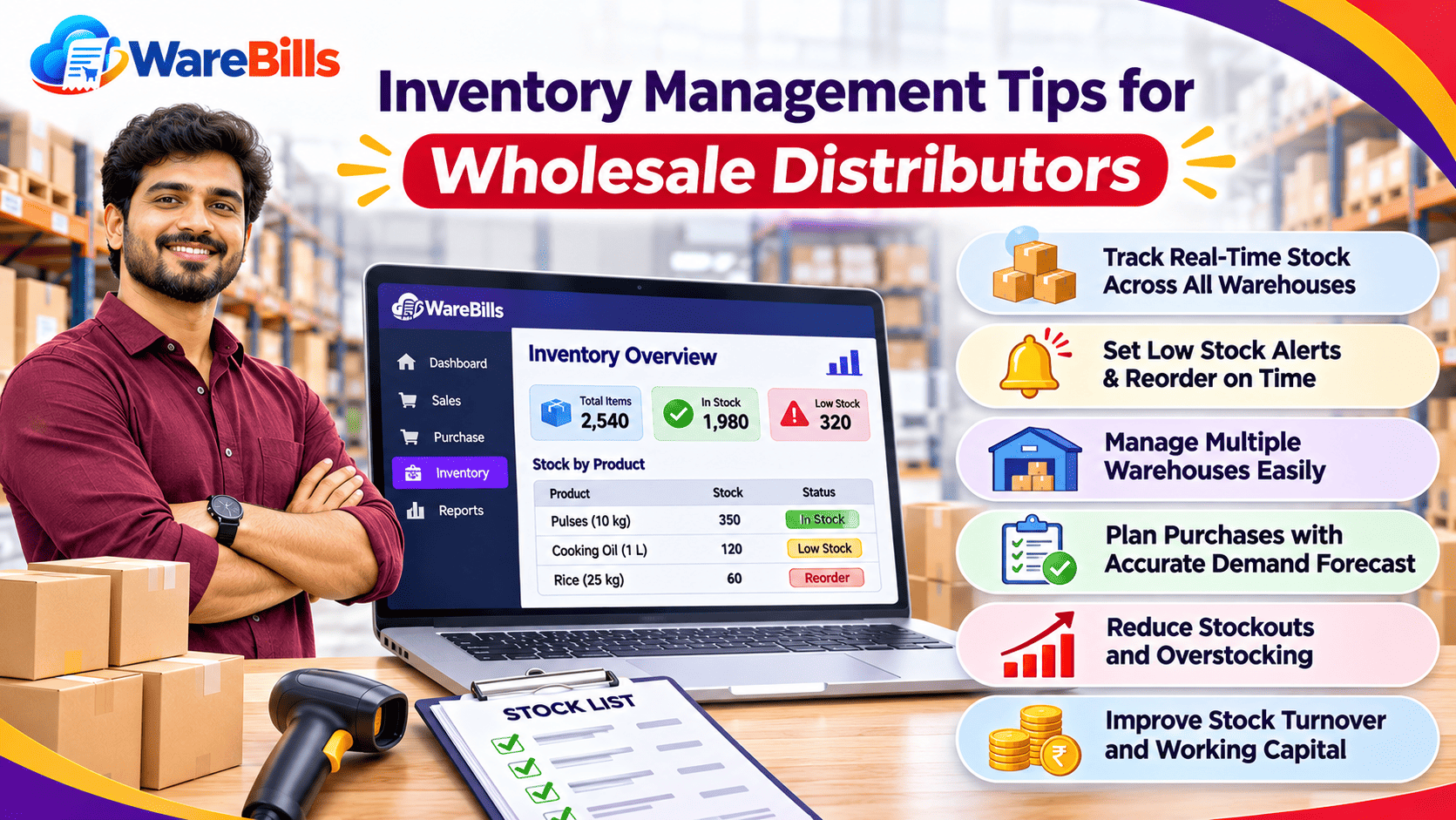
- Warehouse-wise inventory, where required
- Relevant exports or audit information
For example, if the recorded stock of a product differs from the physical count, transaction history may help staff trace recent purchases, sales, returns and adjustments.
WareBills is a billing and inventory software option businesses can evaluate for their operational requirements. Review its available features to determine whether they support your stock tracking, reporting and adjustment workflows.
Do not assume that software alone prevents shrinkage. Accurate records also depend on correct data entry, staff training, appropriate access controls and regular physical verification.
10. Create a Stock Loss Prevention Checklist
A simple checklist can help retail owners apply stock controls consistently.
- Count selected products according to a schedule.
- Verify supplier deliveries before recording quantities.
- Record every sale through the approved billing process.
- Investigate unusual invoice cancellations and returns.
- Record damaged and expired products promptly.
- Require reasons for stock adjustments.
- Restrict access to sensitive stock and transaction controls.
- Review recurring inventory differences.
- Train staff on receiving, billing and return procedures.
- Compare shrinkage trends over consistent periods.
Assign responsibility for each activity so that important checks are not overlooked during busy trading periods.
11. Review Results and Improve Your Process
Reducing inventory shrinkage requires ongoing monitoring.
Review stock differences by product, category, branch or warehouse where the records allow it. Look for repeated discrepancies, unexpected increases and patterns linked to particular processes.
For example, frequent differences in one product category may indicate a counting problem, receiving issue or ineffective storage procedure.
Measure results using consistent valuation methods and comparable time periods. Consider whether a change in stock value, sales volume or product mix affects the comparison.
Once the likely cause is identified, introduce a corrective measure and review whether it reduces future discrepancies.
Conclusion
Inventory shrinkage can affect the profitability and reliability of retail operations. Supplier discrepancies, billing errors, damaged products, inaccurate adjustments and theft can all contribute to stock losses.
Retailers can reduce these risks by conducting regular physical counts, improving receiving procedures, securing stock, recording returns correctly and investigating unusual differences.
Billing and inventory software may support these controls by maintaining transaction records and providing useful stock information. For businesses evaluating WareBills, confirm that its available features meet your specific inventory tracking and reporting requirements.
The most effective approach combines reliable records, consistent staff procedures and regular verification of physical stock.